Reading Clipart, Books and Coffee: A Guide to Digital Illustrations
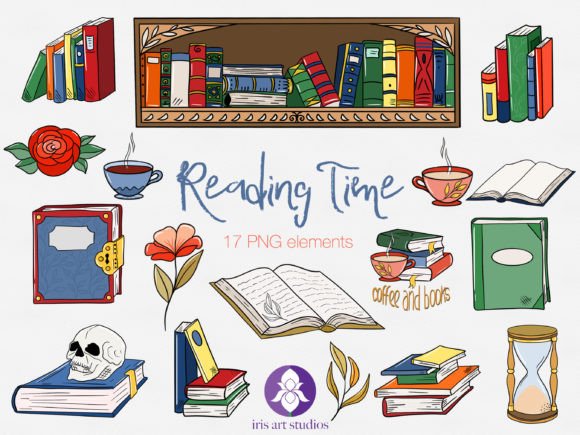
In the realm of digital design and content creation, visual elements play a pivotal role in conveying tone and engaging audiences. Reading Clipart, Books and Coffee represents a specific niche of digital assets that combine literary themes with cozy lifestyle imagery. This collection typically includes hand-drawn illustrations of bookshelves, stacked books, steaming cups of coffee or tea, and other related motifs. For designers, educators, bloggers, and hobbyists, understanding the utility and quality of these assets is essential for making informed purchasing decisions.
This article explores the characteristics of this clipart style, evaluates its practical applications, and discusses key considerations for those looking to integrate such graphics into their projects. By examining the technical specifications and aesthetic qualities, readers can determine whether this type of digital download aligns with their creative goals.
Understanding the Asset Collection
The core of this product offering is a set of 17 assorted digital clipart elements provided in PNG format with transparent backgrounds. Unlike vector files, which are scalable without loss of quality, PNGs are raster images. However, high-quality collections like this one are rendered at 300 PPI (pixels per inch), ensuring they remain crisp and clear for both digital display and standard printing purposes.
The artistic style is described as hand-drawn, which implies a unique, organic aesthetic that differs from generic stock photography or rigid geometric icons. The inclusion of items such as bookshelves, individual books, and beverages like coffee and tea creates a cohesive theme centered around relaxation, study, and literacy. The "instant download" nature of the product means that users receive a ZIP folder containing all files immediately after purchase, allowing for quick integration into ongoing projects.
Why Choose Hand-Drawn Reading Clipart?
There are several reasons why creators might prefer this specific style of illustration over other visual options. First, the hand-drawn quality adds a personal touch that can make digital content feel more approachable and warm. In an era where much online content feels automated or sterile, bespoke illustrations can help establish a distinct brand voice.
Second, the transparency of the PNG files offers significant flexibility. Designers can layer these elements over various backgrounds, colors, or textures without worrying about white boxes or awkward edges. This makes them ideal for composite designs, such as social media banners, website headers, or printable planners.
Third, the thematic consistency of the set saves time. Instead of searching multiple sources for compatible images of books, coffee cups, and shelves, users get a curated collection where lighting, style, and perspective are already harmonized. This coherence is crucial for maintaining a professional look across different materials.
Practical Applications and Use Cases
The versatility of Reading Clipart, Books and Coffee allows it to be used in a wide array of contexts. Below are some common scenarios where these assets provide strong value:
- Educational Materials: Teachers and tutors can use these graphics to decorate worksheets, reading logs, and classroom newsletters. The friendly aesthetic appeals to students and helps create a welcoming learning environment.
- Digital Planning: Users of digital planners on tablets often seek decorative stickers and elements. These PNGs can be imported directly into planning apps to mark reading goals, schedule study sessions, or simply add visual interest to daily layouts.
- Content Creation: Bloggers and social media managers focused on literature, lifestyle, or productivity can use these images to break up text, create featured images, or design Instagram stories. The coffee and tea elements resonate well with "cozy" or "hygge" themed content.
- Print-on-Demand Products: While individual clipart elements may not constitute a full design, they can be combined with typography to create designs for mugs, tote bags, or bookmarks. The 300 PPI resolution ensures that printed outputs remain sharp.
Evaluating Quality and Technical Considerations
When assessing any digital clipart collection, technical specifications are just as important as aesthetic appeal. The mention of 300 PPI is a critical detail. For web use, 72 PPI is often sufficient, but 300 PPI is the standard for high-quality printing. This dual-purpose readiness increases the value proposition of the download.
However, users must understand the limitations of raster images. Since these are PNGs and not vectors (such as SVG or AI files), they cannot be enlarged indefinitely without pixelation. If a project requires massive scaling, such as a large-format banner or billboard, these files may not be suitable unless used at their native size or smaller. Therefore, it is important to check the actual pixel dimensions of the files before purchasing to ensure they meet the size requirements of your intended application.
Another consideration is the exclusivity of the artwork. The description notes that the elements are hand-drawn by the creator and not found elsewhere. This uniqueness can be a significant advantage for brands looking to avoid the generic look associated with free stock image libraries. It helps in building a recognizable visual identity.
Tradeoffs and Alternatives
While this clipart set offers many benefits, it is not the perfect solution for every project. One tradeoff is the fixed nature of the elements. Unlike vector graphics, you cannot easily change the color of individual components within a PNG file without advanced photo editing skills. If your brand colors are very specific and do not match the warm tones typically associated with coffee and old books, you may find the customization options limited.
Additionally, those who require a vast library of diverse subjects might find a 17-element set restrictive. If a project requires dozens of different variations of books or beverages, a larger subscription-based stock photo service might be more cost-effective in the long run. However, for targeted, thematic projects, a curated small batch often provides better cohesion than sifting through thousands of unrelated images.
Alternatives to consider include:
- Vector Illustrations: Better for scalability and color customization but often lack the textured, hand-drawn feel.
- Stock Photography: Offers realism but can feel impersonal and may require licensing fees for commercial use.
- Free Clipart Libraries: Cost-effective but often suffer from inconsistent styles, lower resolutions, and overuse across the web.
Making the Right Decision
To determine if Reading Clipart, Books and Coffee is the right choice for your needs, consider your primary use case. If you are creating digital products, educational resources, or social media content that benefits from a cozy, literary aesthetic, this collection is a strong fit. The transparent backgrounds and high resolution make it technically robust for most standard design tasks.
If you need extensive customization, infinite scalability, or a broad range of unrelated subjects, you may want to explore vector libraries or larger stock databases instead. Ultimately, the value lies in the balance between aesthetic uniqueness and technical practicality. For creators who appreciate hand-drawn charm and need ready-to-use assets for print and digital media, this type of instant download offers a convenient and effective solution.
By carefully reviewing the file formats, resolution, and artistic style, you can ensure that these digital elements enhance your projects rather than complicate them. Whether for a simple blog post or a complex planner layout, the right clipart can elevate the visual storytelling of your work.